Commercial · Facer
Commercial Rekeying in Facer
Two people left over the summer and the keys they handed back came up one short. Nobody is sure whether the missing key was for the front door, the stockroom or both, and the sign-out sheet stopped being filled in a year ago.
Call now · open 24/7(289) 432-1115In plain words
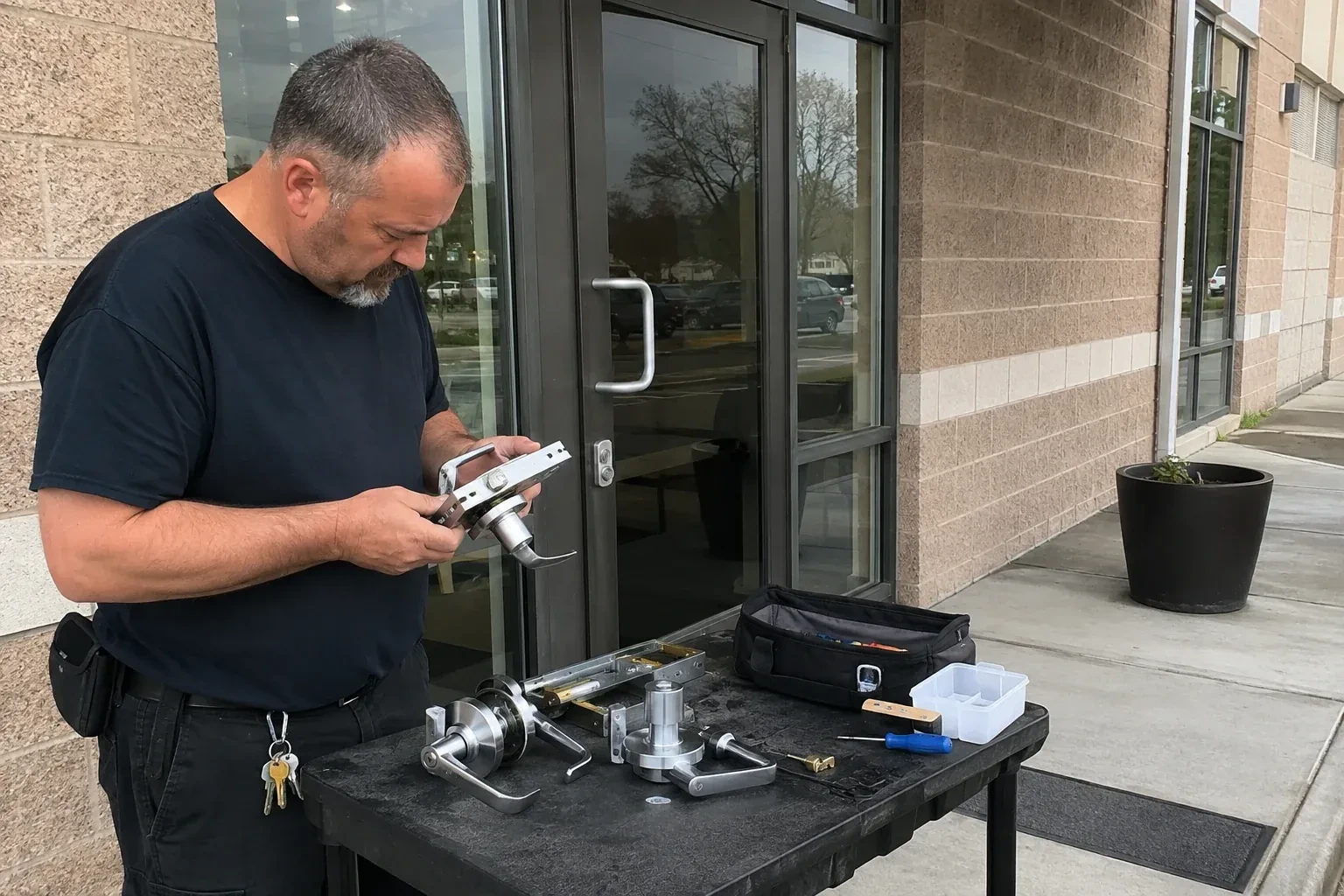
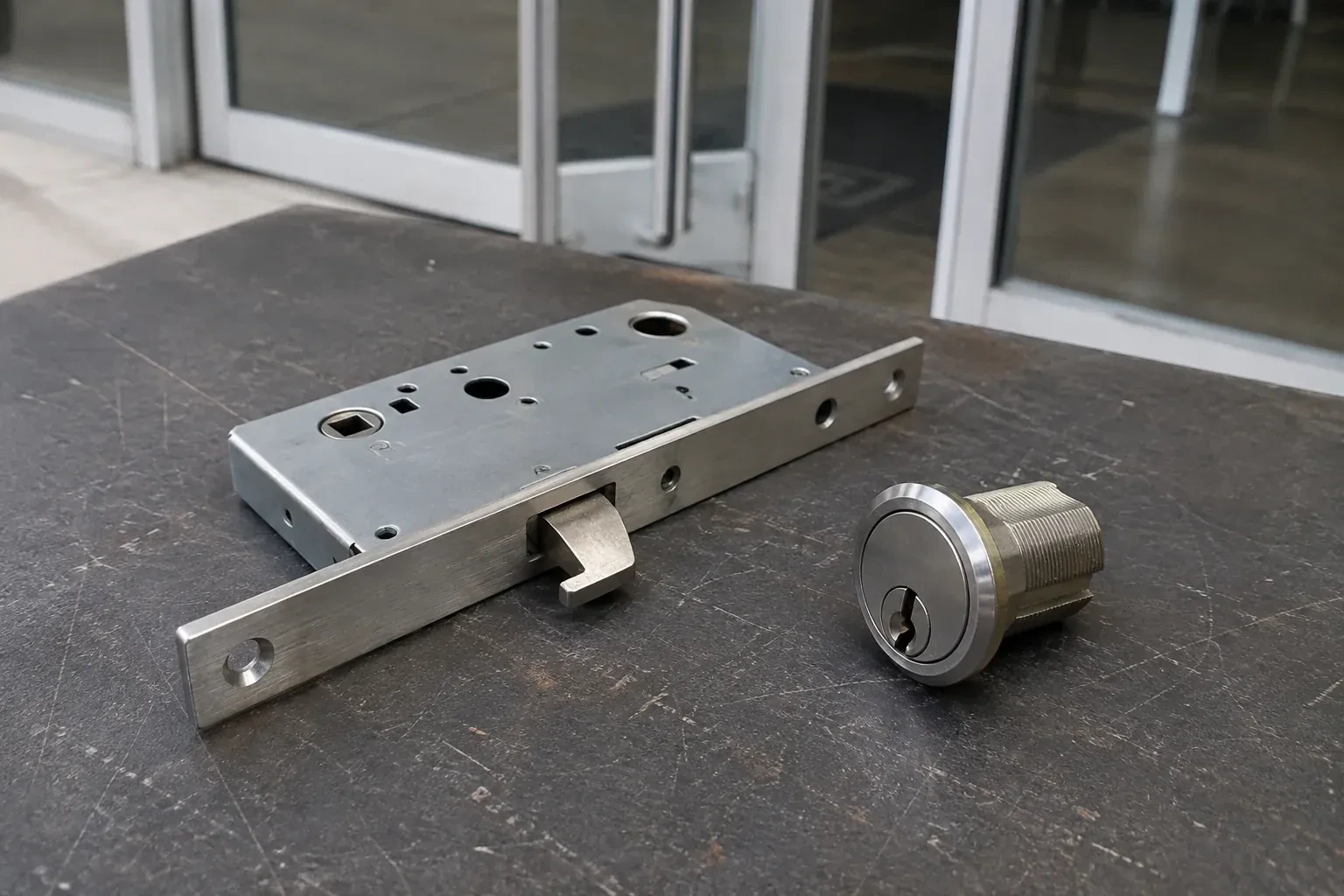
For most business doors, rekeying is the sensible middle path between doing nothing and buying new hardware. Commercial cylinders are built to be repinned many times, and a lever set, mortise lock or storefront cylinder in decent condition has years left in it. Rekeying keeps the finish, the door preparation and the handles you already have and changes only the small brass pins inside. Where a cylinder is worn, corroded by winter salt or too light for the room behind it, the locksmith says so and offers a replacement for that door alone; the rest are rekeyed to the new plan.
How the visit goesThe manager's key ring went missing somewhere between the bank and the car, and the master on it opened every door in the building. Until the cylinders are changed, whoever finds it is holding the run of the place.
Commercial Rekeying · Facer
How the visit goes
- 1
Choosing the window and the order of doors
The last part of the assessment is practical: when can the work happen, and in what order. A retail shop may prefer the hour after closing; a restaurant, the mid-morning lull; a warehouse, the gap between the last outbound truck and the night shift. The locksmith also asks about deliveries, the cleaning crew, the alarm monitoring company and anyone else who holds a key and needs a new one before their next visit. From this comes a sequence, typically the doors staff use least first and the main entrance last, so there is always a working, lockable way in and out while the cylinders are being changed.
- 2
Pinning the master and change keys
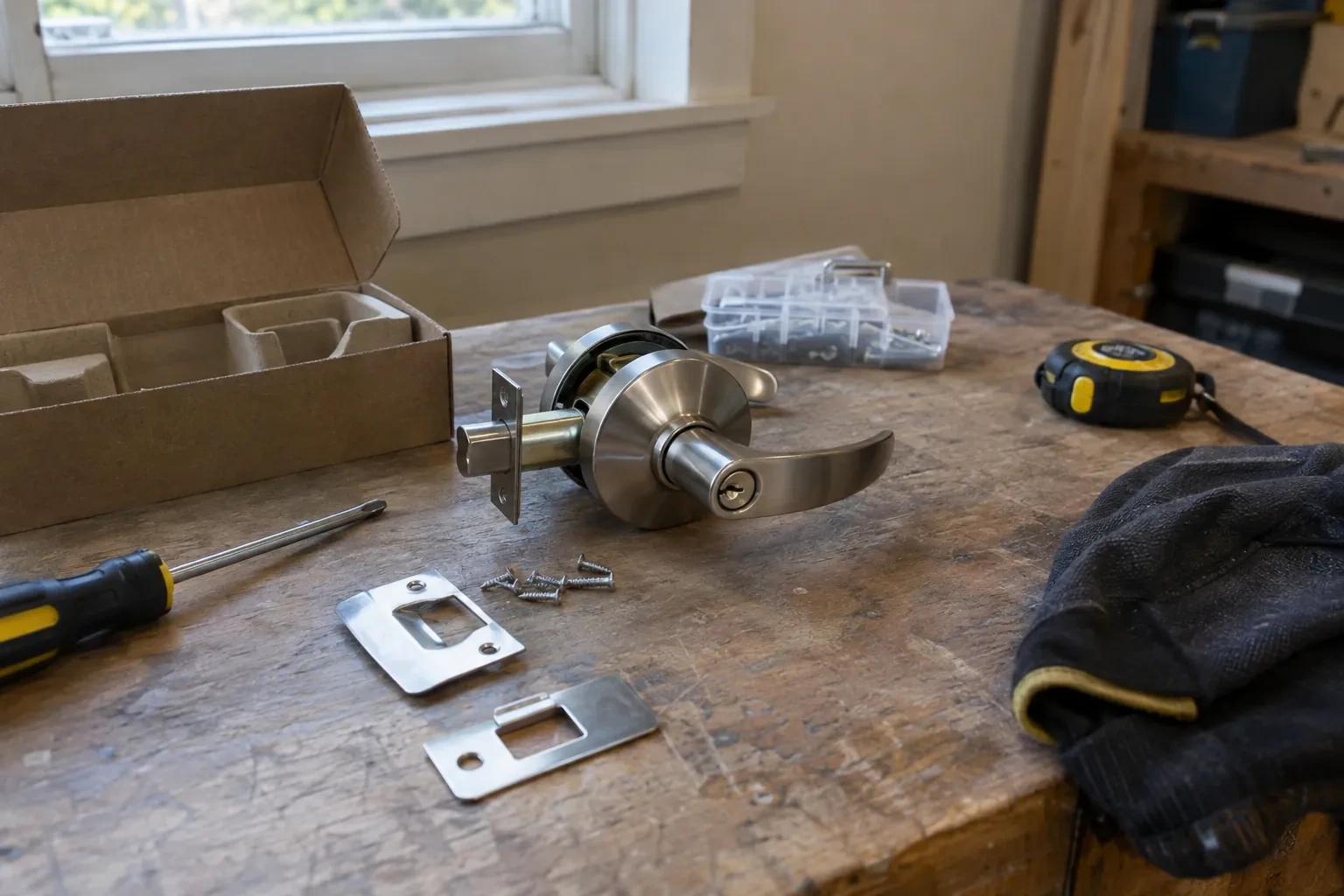
When the plan includes a master, each cylinder is pinned to accept two keys: its own change key and the master above it. Thin master pins sit in the pin stacks so the plug can turn at both the change key's height and the master's; master keying can also create extra, unintended combinations, so the locksmith charts the system to keep those from lining up with someone else's key, and the manager's key opens its whole group and nothing beyond it. A well-built system leaves unused combinations in reserve, so when the business adds a door or a department next year the new cylinder joins the plan without disturbing the keys already in people's pockets.
- 3
Exits that still open the way they must
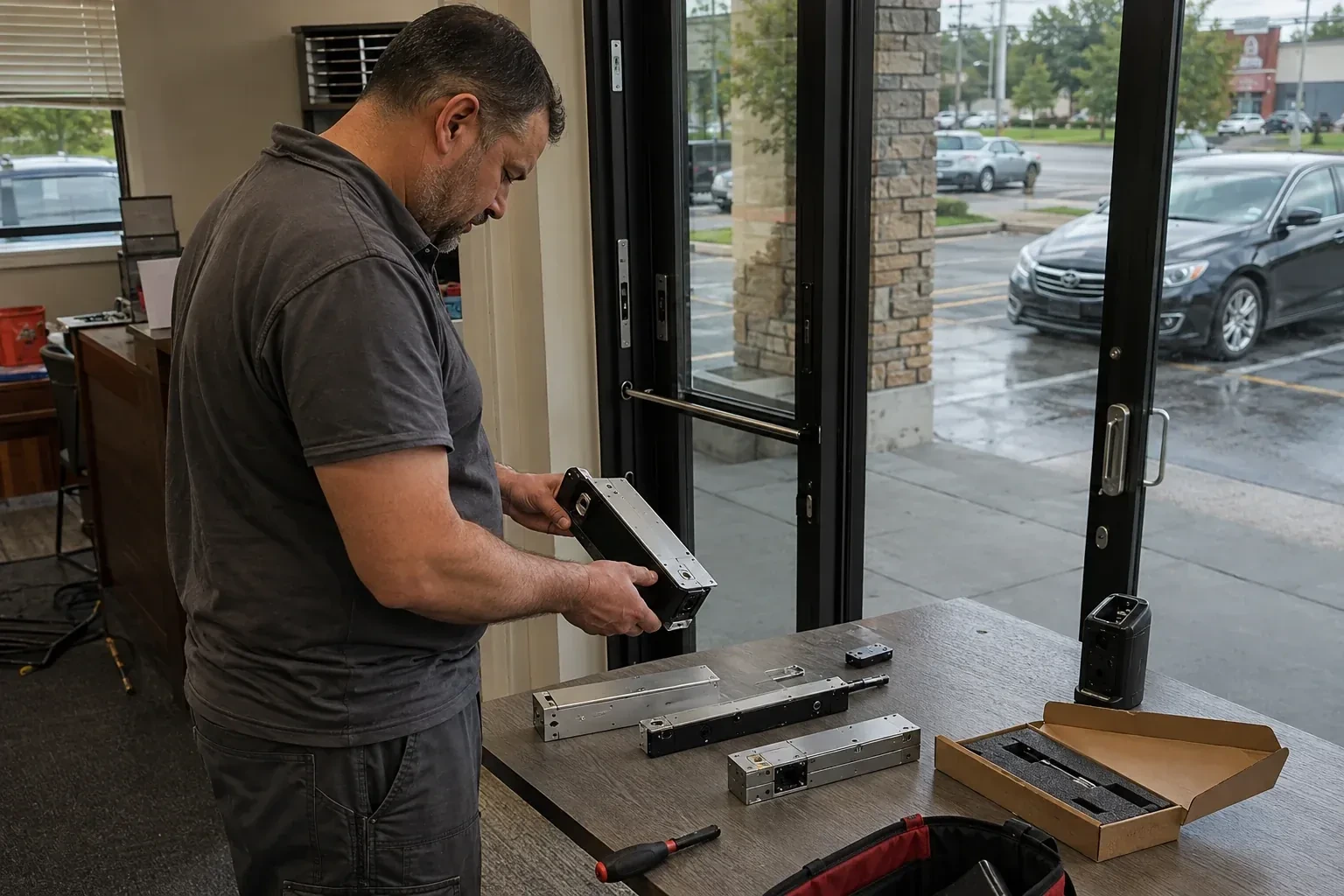
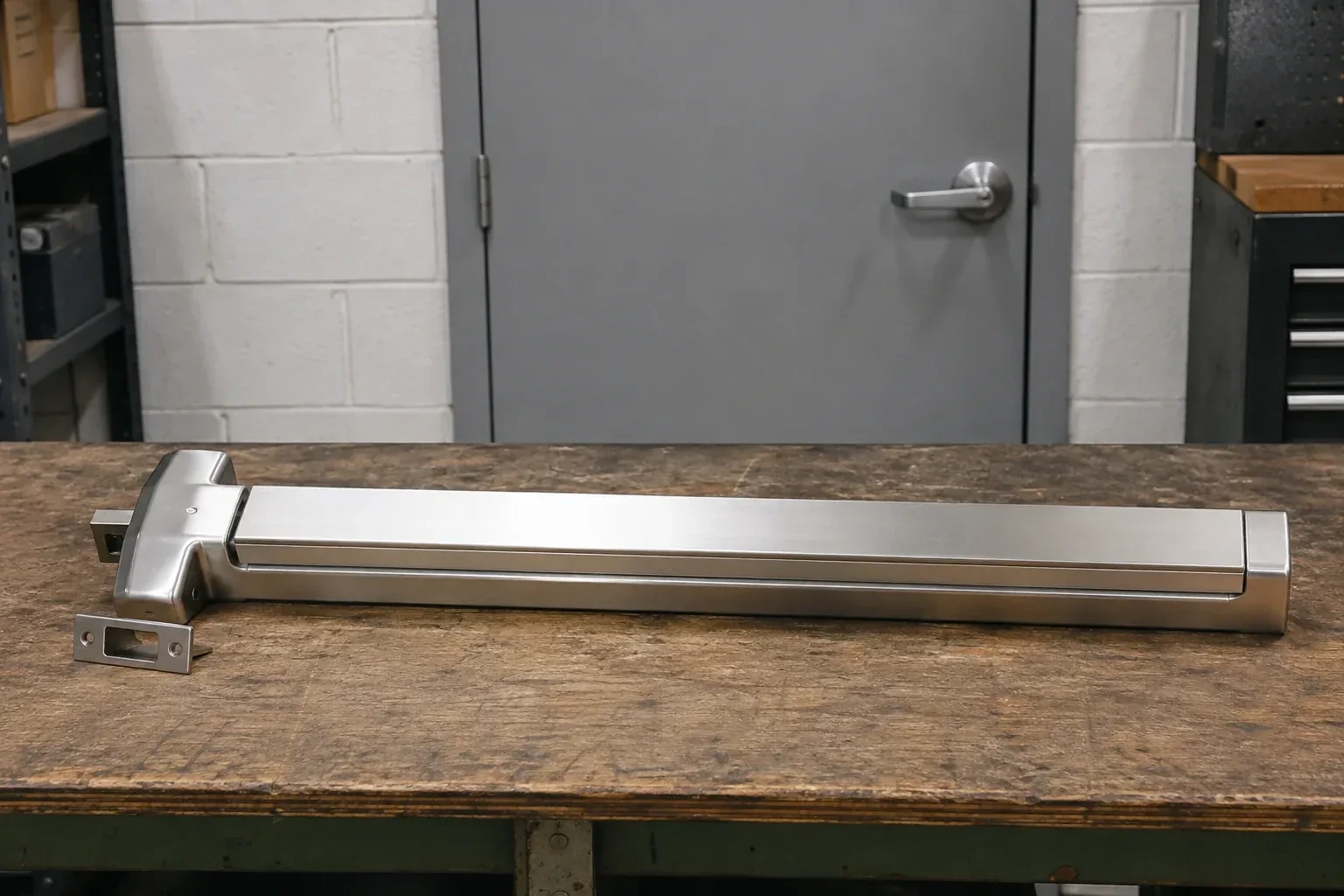
Rekeying changes who can come in; it never changes how people get out. Every exit door and every door on the way to one is left opening from the inside with a single motion and no key. On a door with a panic bar, the outside cylinder simply controls entry, and the bar keeps working exactly as before. Once the locksmith has finished, walk the exit routes yourself, push each bar and turn each thumb-turn, and make that walk a habit at the start of every season so a new deadbolt or a helpful padlock never creeps onto an exit.
In the van
- Key gauge and decoder
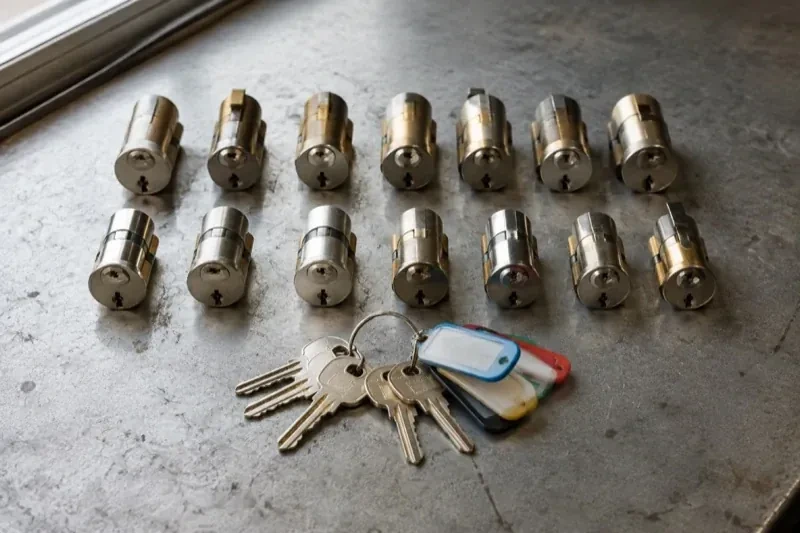
- Interchangeable cores and control key
- Commercial pin kit
- Cylinder removal and spanner tools
- Key stamp set and tags
What affects the quote
- 1
Number of cylinders
The count of openings drives the quote more than anything else: each cylinder is removed, repinned, refitted and tested individually, so a three-door shop and a twelve-office suite are very different jobs.
- 2
After-hours or split visits
Work done after closing, before opening or split across two visits to suit trading hours costs the same amount as a single daytime block. The exact figure is confirmed on site once the number of cylinders and the keying plan are known.
- 3
Restricted keyway
Moving to a patented, restricted keyway means new cylinders or cores rather than a repin of the old ones, and the blanks themselves carry a higher price than standard keys.
Same fees day, night or weekend.
Commercial Rekeying: questions
Can the work be done while we are open?
Yes, and many businesses prefer it. The locksmith works one door at a time, finishing and testing each before starting the next, and leaves the main entrance until a quiet moment or until after closing. Doors staff are using are done last and their new keys are handed over first. Where a business would rather nobody sees the work, an early morning or after-hours window is arranged instead.
Will rekeying affect our alarm system or card readers?
Mechanical rekeying leaves electronics alone: alarm panels, card readers and keypads keep their codes and credentials. What changes is the list of people holding keys, and it is worth updating the alarm company's keyholder list and retiring the codes of anyone who has left at the same time, since keys and codes usually walk out together. Where a door has both a card reader and a keyed override, the override cylinder is rekeyed with the rest.
What happens with our fire exit doors and panic bars?
The outside cylinder on an exit door controls entry only, and it can be rekeyed like any other. The inside stays as it must: one push or one turn, no key, no special knowledge, on the exit door itself and on any door on the way to it. A locksmith will not add a keyed device to the inside of an exit, and will point out one if it already exists.
Niagara, Ontario
Facer information
- Town
- Facer, Niagara, Ontario
- In business
- 12 years
- Hours
- Open 24/7 · nights, weekends and holidays, same fees
- Phone
- (289) 432-1115
- Visits
- On-site assessment preferred. Request a visit or call.
What the census means at the door
71%
Older homes. About 71% of homes in St. Catharines were built in 1980 or earlier, according to the 2021 Census.
Older homes tend to have had many hands on their doors: owners, tenants, tradespeople, family. A locksmith visiting such a house pays attention to who holds keys now, and rekeying or a keyed-alike set often matters more than any new hardware.
56%
A mix of homes. Single-detached houses make up about 56% of homes in St. Catharines (2021 Census).
Where housing types are mixed, the same lost-key call means different things. In a house, rekey every door on the property. In an apartment, rekey the suite door and check with management about the common entrance. The locksmith asks which it is first.
Nearby
Open 24/7
Request a visit
Two people left over the summer and the keys they handed back came up one short.
Call now · open 24/7(289) 432-1115- On-site assessment preferred
- Same fees day, night or weekend
- 12 years in business