Plan ahead Commercial · St. Catharines
Panic & Exit Hardware
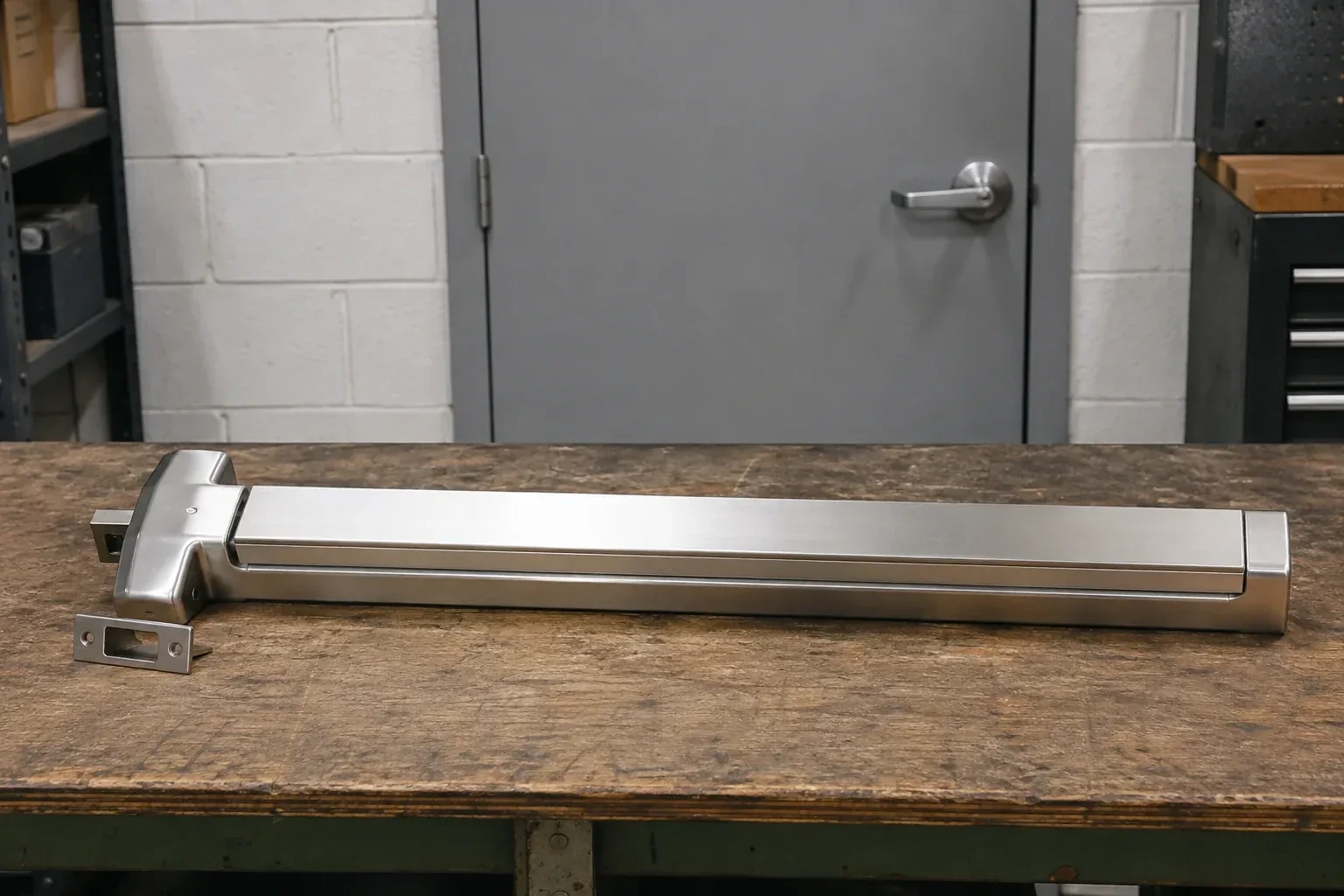
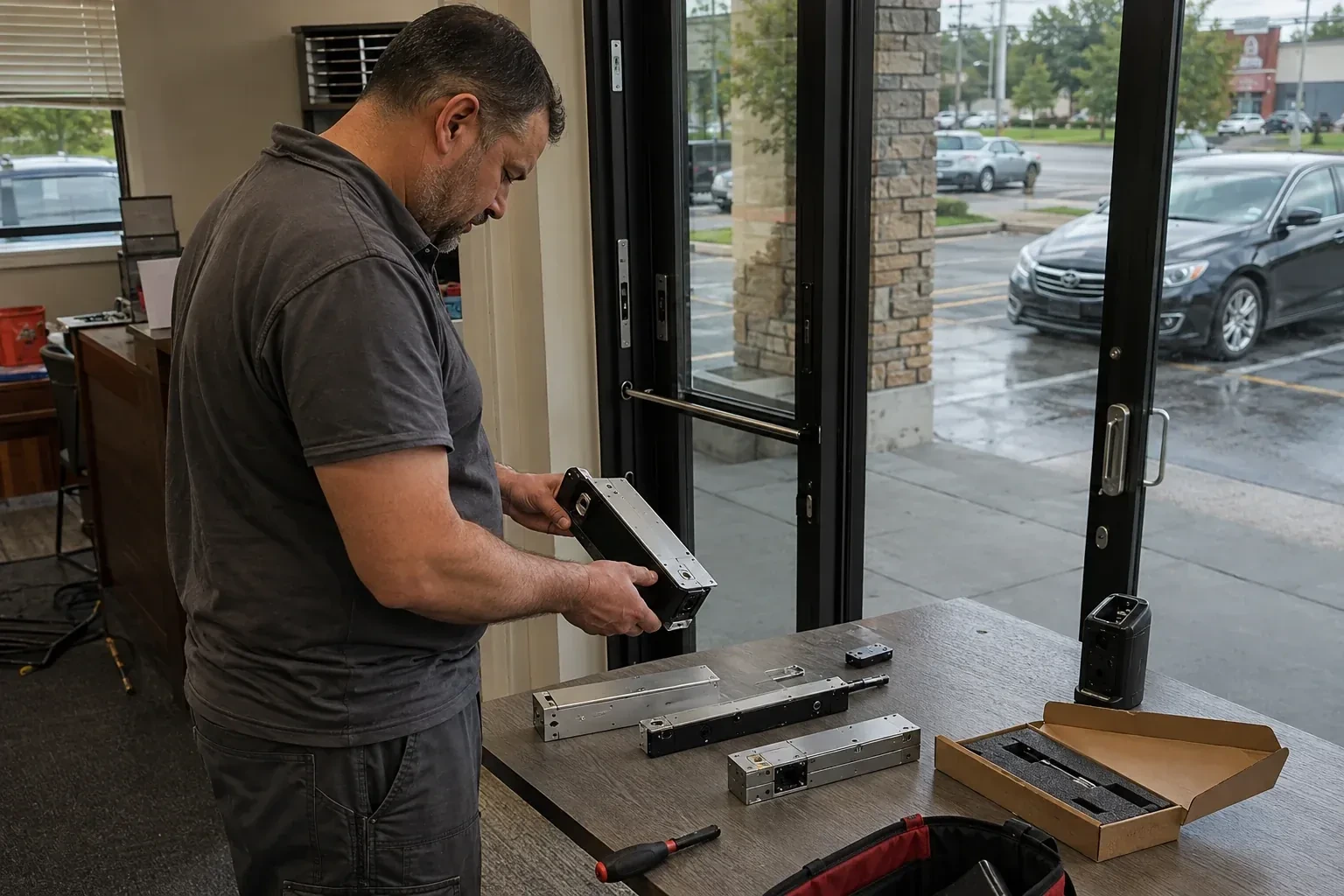
The crossbar on the loading-dock door barely returns anymore. Someone has to lean into it with a shoulder, and twice this month it has stuck half-latched, propped by whatever was nearest.
Call now · open 24/7(289) 432-1115In plain words
The visit ends with a record, not just a working door. Every device fitted is logged with its type, its rating, the force and latch checks it passed, and who now holds the dogging key. That record is what a fire inspector, an insurer or a new property manager asks for later, and it is far easier to hand over on the day of installation than to reconstruct afterward from memory of what went on which door.
How the visit goesThe crossbar on the loading-dock door barely returns anymore. Someone has to lean into it with a shoulder, and twice this month it has stuck half-latched, propped by whatever was nearest.
Panic & Exit Hardware · St. Catharines
How the visit goes
- 1
Reading the door itself
Every opening gets the same close look: whether it is fire-rated, which way it swings, how wide it is, and what preparation, if any, already exists in the door and frame from earlier hardware. A hollow-metal fire door takes a different device than a wood door in a non-rated partition, and a narrow-stile aluminum storefront door narrows the choice of device further still. Reading this correctly before anything is ordered is what keeps the installation from turning into a second visit once the wrong device arrives and does not fit the preparation already in the door.
- 2
Adding electrified functions
Where the plan includes access control or an alarm, the wiring is run and terminated to the device without touching its mechanical exit function: a request-to-exit switch reports that the pushpad or crossbar was actuated, electric latch retraction lets an authorized signal release the latch for entry, and an alarm module sounds locally when the crossbar is used. On a fire-rated opening, electric latch retraction is arranged to relatch automatically the instant a fire-alarm signal comes in, since a fire door has to keep its active latch and cannot rely on a mechanical dogging function to do that.
- 3
Staff who understand the dogging key
Whoever holds the dogging key or keyed dogging cylinder now knows what it does and, just as importantly, when not to use it: a door in a fire separation keeps its active latch at all times, so dogging belongs on openings where that restriction does not apply. Staff who prop doors for deliveries or busy periods have a legitimate tool for that instead of wedging the door with whatever is nearest, and the building keeps control over who can use it.
In the van
- Signage and labels
- Request-to-exit switch
- Through-fixings and mounting hardware
- Strike and reinforcement
- Astragal and mullion hardware
What affects the quote
- 1
Access to the opening
A ground-floor commercial door is straightforward to reach. An opening behind scaffolding, up a stairwell with no elevator, or in a space still under active construction takes longer to work at.
- 2
Fire-rated versus non-rated opening
A fire-rated door needs hardware specifically listed for that assembly and installed to keep the rating intact, which is more involved than fitting a standard device to a non-rated door.
- 3
Signage and labelling
Any exit signage or alarm labelling the opening needs is a small addition on its own, but it is named in the quote rather than assumed to already exist on the door.
Same fees day, night or weekend.
Panic & Exit Hardware: questions
Who is responsible for keeping the hardware compliant?
The building owner or the party the owner assigns, often a facilities manager, is responsible for keeping exit hardware in working order and for the fire door assembly testing that goes with it. A locksmith installs and services the hardware and can keep records on the owner's behalf, but the ongoing duty to maintain the assembly sits with whoever holds the building.
Can I add a request-to-exit switch for my access-control system?
Yes. A request-to-exit switch is wired to signal the access-control panel that the pushpad or crossbar was actuated. Telling that apart from a forced or propped door usually means pairing it with a door-position contact and the panel's own logic, since the switch on its own only reports that the hardware was used. It sits alongside the mechanical device without changing how the crossbar or touchpad works, so the door still releases under a push even if the access-control system loses power.
What is dogging, and can every door have it?
Dogging holds the device's latch retracted so the door works as a simple push-pull for a period, useful during business hours on a busy entrance. It is not available on fire-rated openings, because a fire door must keep an active latch at all times; on those doors, electric latch retraction achieves a similar push-pull convenience without ever leaving the latch mechanically held back.
Niagara, Ontario
St. Catharines information
- Town
- St. Catharines, Niagara, Ontario
- In business
- 12 years
- Hours
- Open 24/7 · nights, weekends and holidays, same fees
- Phone
- (289) 432-1115
- Visits
- On-site assessment preferred. Request a visit or call.
What the census means at the door
71%
Older homes. About 71% of homes in St. Catharines were built in 1980 or earlier, according to the 2021 Census.
Basement and side entries on older homes were often fitted long after the house was built, with whatever lock was on hand. Bringing those doors up to the standard of the front entry, and onto the same key, is a common and satisfying job.
56%
A mix of homes. Single-detached houses make up about 56% of homes in St. Catharines (2021 Census).
Mixed housing means a locksmith sees a bungalow in the morning and a condo tower in the afternoon. The stocked van has house-door deadbolts, suite-door cylinders and the finishes for each, so neither kind of customer waits for a second visit.
Nearby
Open 24/7
Request a visit
The crossbar on the loading-dock door barely returns anymore.
Call now · open 24/7(289) 432-1115- On-site assessment preferred
- Same fees day, night or weekend
- 12 years in business