Emergency Car keys · St. Catharines
Car Key Replacement in St. Catharines
You bought the car privately and it came with a single key on a shoelace. Every time it leaves your hand you notice, and you would like a second one made before the first goes missing.
Call now · open 24/7(289) 432-1115In plain words
Every replacement key starts with a simple question: is this your car to key? The answer is settled with government photo identification and the vehicle permit, the green ownership issued by ServiceOntario, matched against the VIN on the dash and the door label. A lease agreement, fleet paperwork or a bill of sale covers a company car or a vehicle bought last week. The check takes a minute and it protects you as much as anyone, because the same standard applies to whoever might one day ask for a key to your car. Once it is done, the technical work begins.
How the visit goesThe key snapped at the head while you were turning it in a stiff, frosty door lock. Half the blade is in your hand, the rest is inside the lock, and the plastic head still lights up when you press a button.
Car Key Replacement · St. Catharines
How the visit goes
- 1
Proof that the car is yours to key
Before a blank leaves the van, the locksmith confirms that the person asking for a key is entitled to one. Government photo identification is the first piece. The second is a document tying that person to this vehicle: the vehicle permit with the VIN on it, an insurance slip, a lease, or fleet paperwork for a company car. The VIN on the paper is compared with the one stamped on the dash and printed on the door label. A car bought last week and still in the seller's name, an estate vehicle or a family member's car each has its own paper trail, and mentioning it on the phone means the right document is at hand.
- 2
All keys lost: reset first, then reissue
When nothing remains, the sequence changes. The car is opened, the blade is produced from the lock or the code, and then, where the system supports it, the immobilizer memory is reset so every stored key is erased; others follow their own maker-specific route instead. New keys are then registered one after another, and registering two gives the car a spare from day one. On some vehicles this stage needs a longer security timer or manufacturer data, which is arranged in advance. The old keys, wherever they are, are now unknown to the car. Each new key is then started and driven a short distance to confirm the reset held.
- 3
Keys that work every lock on the car
You leave with keys that have been tried, not merely programmed. Each one has opened the doors, turned or woken the ignition, started the engine and worked every button it carries, and you have watched it happen. If the car has a mechanical lock that was stiff, it has been freed and lubricated so the blade is a genuine backup. Should the old key have been rebuilt around its original electronics, it has been through the same checks as a brand-new one. The point of the routine is simple: the next time you reach for the key, there is nothing to wonder about.
In the van
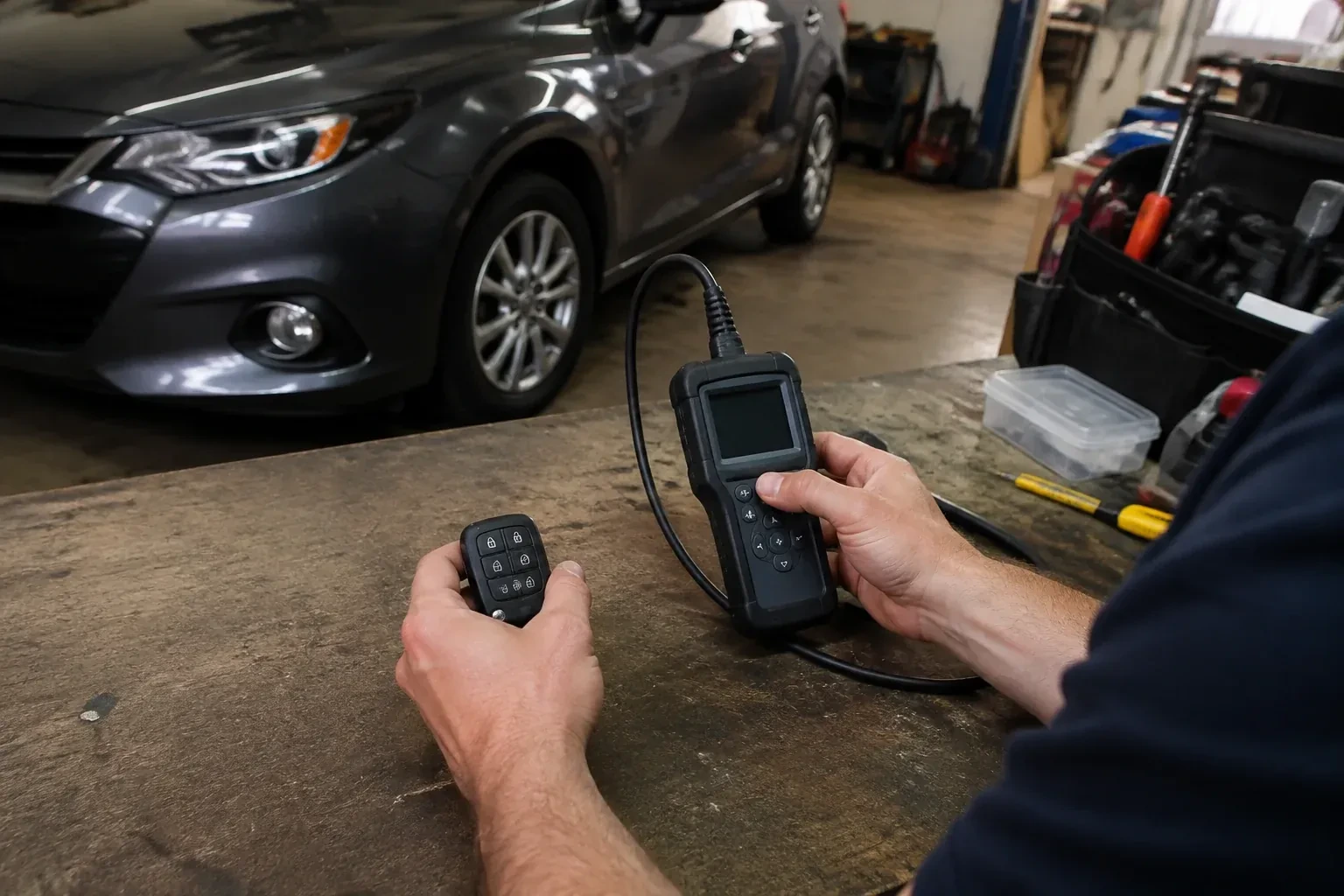
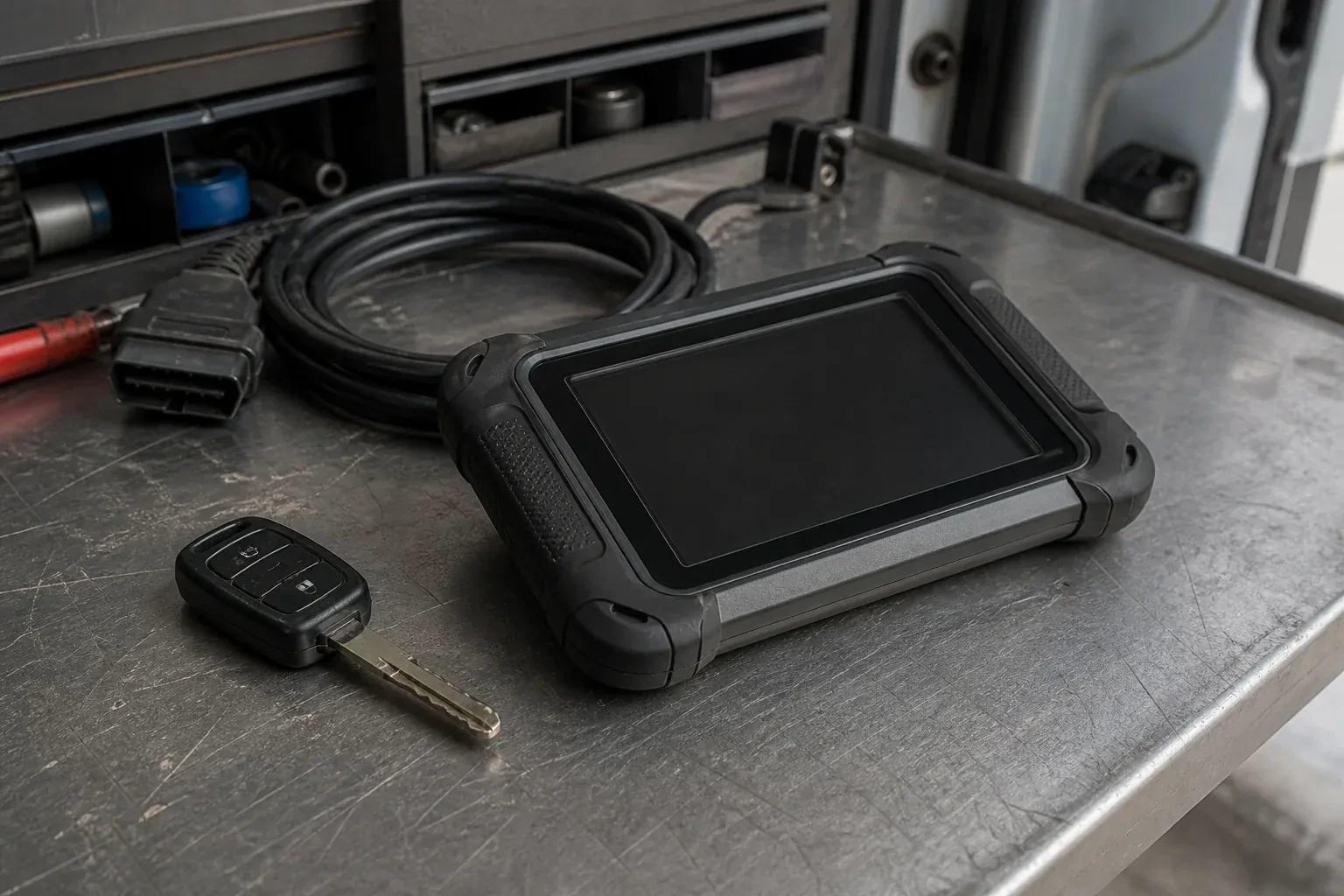
- OBD programming tool
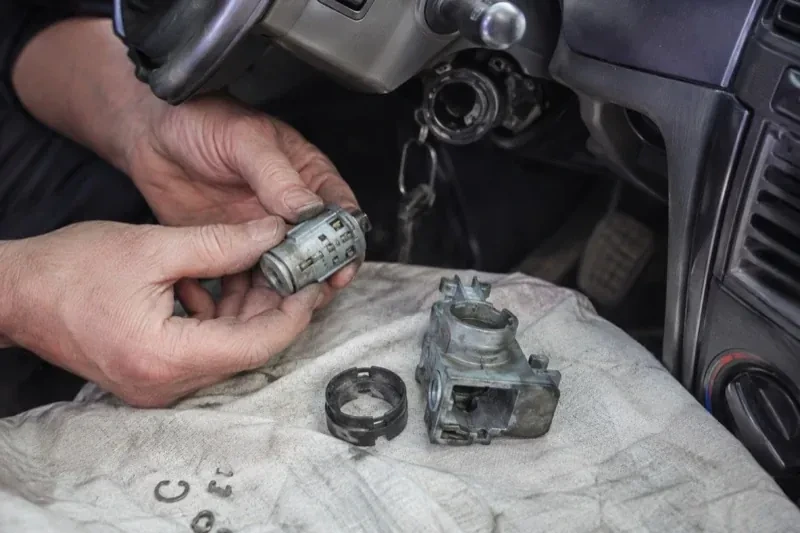
- Decoding pick and lock reader
- Proximity fob with emergency blade
- Security PIN or secure-data access
- Code-cutting machine
What affects the quote
- 1
Erasing the keys you no longer hold
Removing lost or stolen keys from the immobilizer during the session is a small extra step, and re-registering the keys you kept follows it. If you want the old keys silenced, say so and it is quoted.
- 2
Programming route the car allows
Some vehicles accept a new key through an on-board routine, most through the programming tool, and a few only through a dealer procedure. The route determines the time and the data involved, and the quote says which it is.
- 3
Battery and access to the car
A flat vehicle battery needs a maintainer during programming, and a locked car with no key has to be opened before the diagnostic port can be reached. Both are small items that the quote names plainly.
Same fees day, night or weekend.
Car Key Replacement: questions
Will I get a written estimate before the work starts?
You should expect one. Consumer rules for motor vehicle repair work in this province call for a written estimate before any charge and for your authorization of the work, and a good locksmith works that way as a matter of course. The estimate names what is being supplied: the blank or fob, the cutting, the programming, any erasing of old keys and the number of keys, so you can see the parts of the job before agreeing.
Does the car have to be towed to a shop?
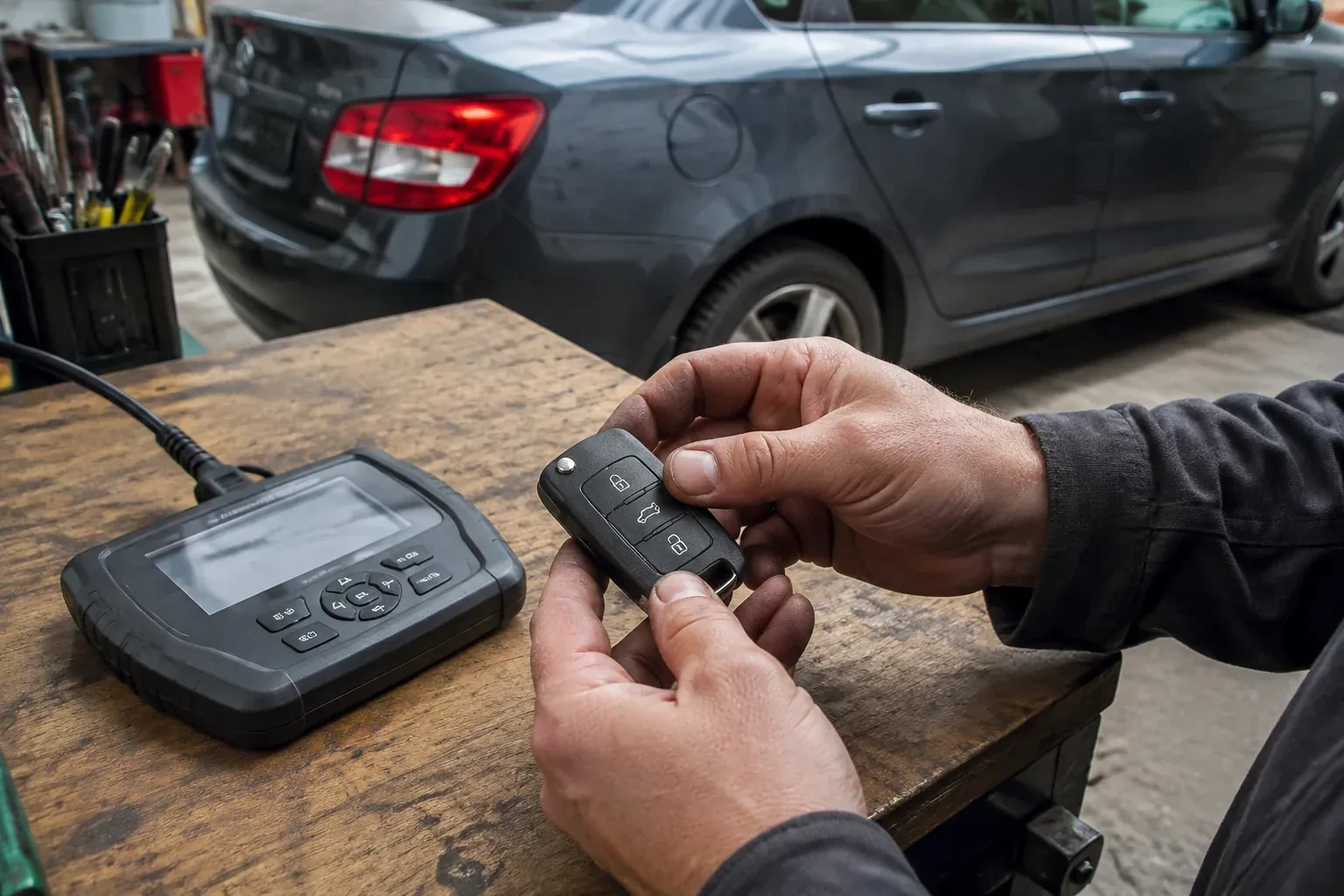
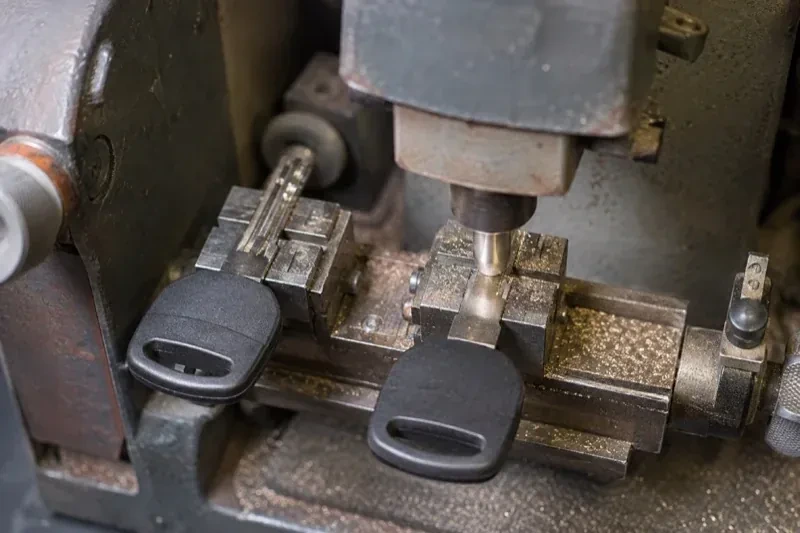
Often not. The cutting machine, blanks and programming tool travel in the van, and the work is done where the car sits: a driveway, a parking garage, the roadside or a workplace lot. The locksmith connects to the diagnostic port under the dash and cuts and programs on the spot. An unsupported or dealer-only system may still need the vehicle to go to a dealer or a suitably equipped shop, which the VIN check flags beforehand.
The fob died in the cold. Is that a battery or the key?
Almost always the battery. Coin cells deliver less in deep cold, and a cell that was already weak goes quiet on the first bitter morning. Most cars still start with a flat fob if it is pressed to the start button or laid in a marked slot, and the emergency blade opens the door. Replace the cell, and if the fob stays silent with a fresh one, the remote board or a corroded contact is the next thing to look at.
Car Keys
Bigger photo, sooner job: Emergency Book soon Plan ahead
Niagara, Ontario
St. Catharines information
- Town
- St. Catharines, Niagara, Ontario
- In business
- 12 years
- Hours
- Open 24/7 · nights, weekends and holidays, same fees
- Phone
- (289) 432-1115
- Visits
- On-site assessment preferred. Request a visit or call.
What the census means at the door
71%
Older homes. About 71% of homes in St. Catharines were built in 1980 or earlier, according to the 2021 Census.
Basement and side entries on older homes were often fitted long after the house was built, with whatever lock was on hand. Bringing those doors up to the standard of the front entry, and onto the same key, is a common and satisfying job.
56%
A mix of homes. Single-detached houses make up about 56% of homes in St. Catharines (2021 Census).
Mixed housing means a locksmith sees a bungalow in the morning and a condo tower in the afternoon. The stocked van has house-door deadbolts, suite-door cylinders and the finishes for each, so neither kind of customer waits for a second visit.
Nearby
Open 24/7
Request a visit
You bought the car privately and it came with a single key on a shoelace.
Call now · open 24/7(289) 432-1115- On-site assessment preferred
- Same fees day, night or weekend
- 12 years in business