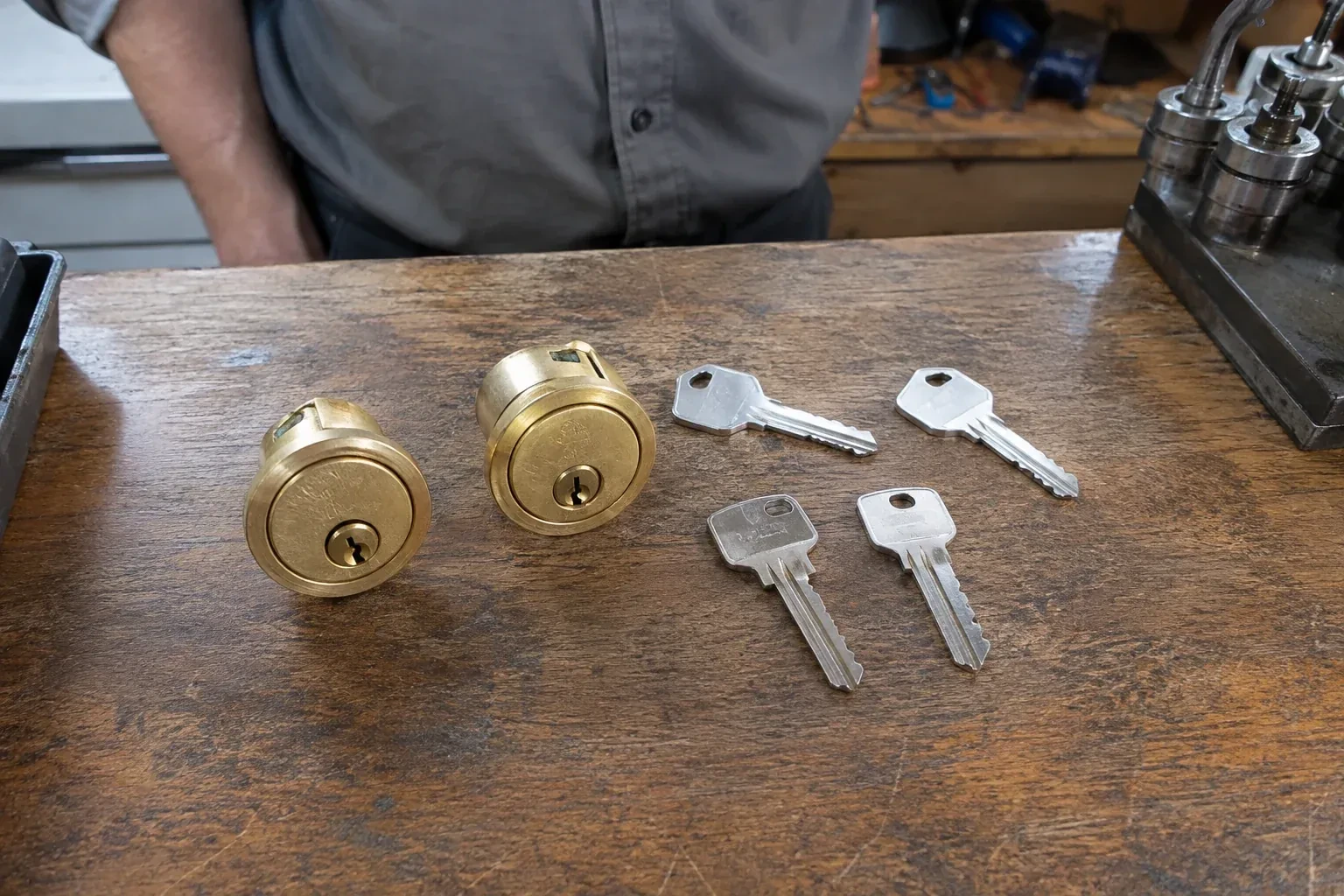
Change or rekey · Niagara Gardens
Lock Rekeying in Niagara Gardens
The builder handed over your new home with a stack of identical keys, and you know the framing crew, the painters and the flooring installers all used a construction key during the build. The doors are brand new, but the key that opens them should be yours alone.
Call now · open 24/7(289) 432-1115In plain words
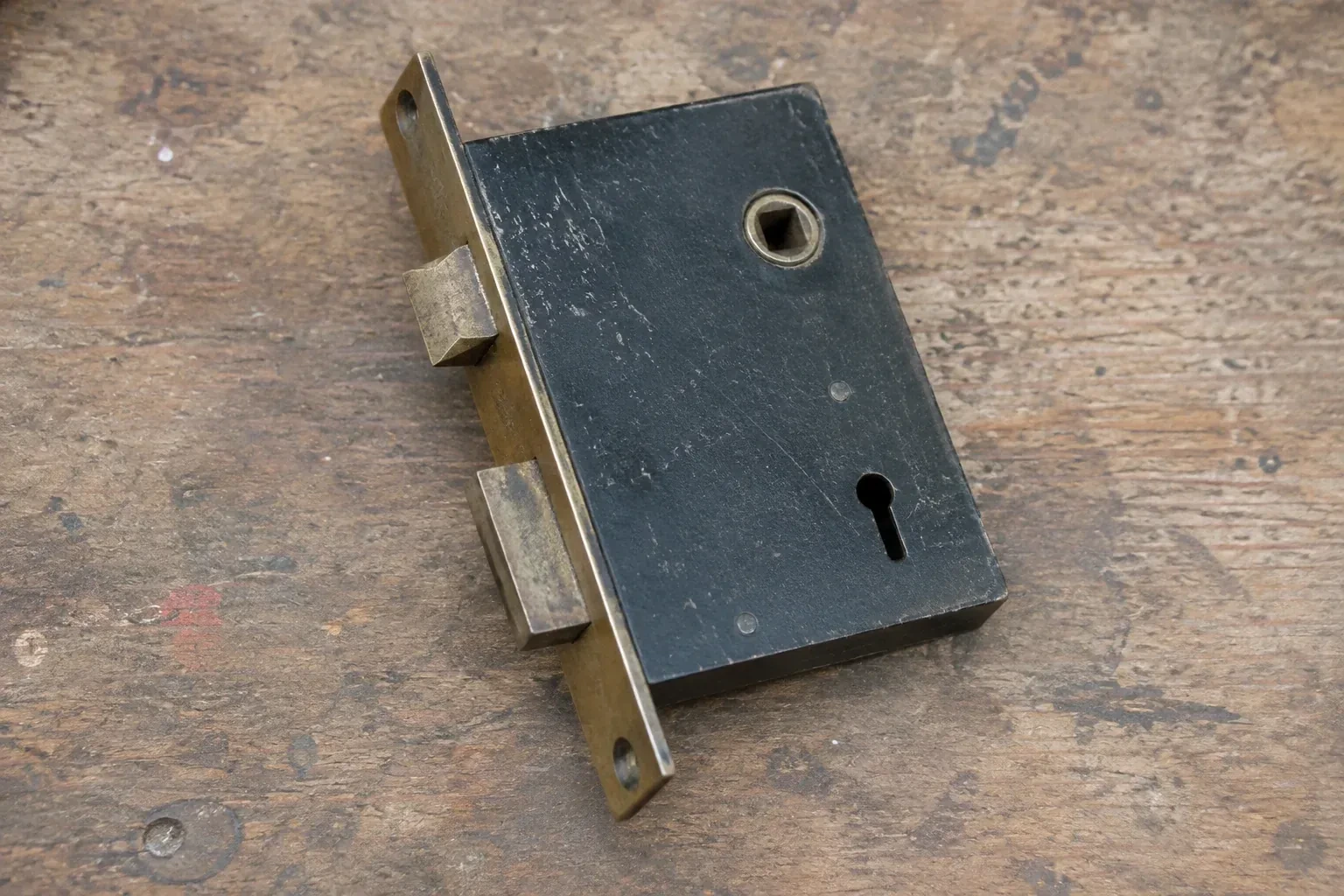
Rekeying is a change made inside the lock rather than to the lock itself. Many keyed cylinders hold a row of small pins that have to sit at exactly the right heights before the plug will turn, set by the cuts on your key, though some residential cylinders use a side-locking bar instead of pins. A locksmith slides the plug out, removes the pins, and loads a new set matched to a freshly cut key. Reassembled, the lock looks and feels exactly as it did, except that the new key turns it and every key cut before today does not. Your hardware, finish and door stay as they were.
How the visit goesThree months of renovation are finally done. The kitchen looks wonderful, and along the way a general contractor, a tile installer, a plumber and an electrician each carried a key to your front door at one point or another.
Lock Rekeying · Niagara Gardens
How the visit goes
- 1
Reading the keyway on each lock
Whether several doors can share one key depends on the cylinders, not the number of doors. Each lock has a keyway, the profile a key must match to enter the plug, and only cylinders with the same keyway can be pinned to the same key. The locksmith looks at the face of each cylinder and the profile of each existing key to sort the house into families. Most homes carry one or two of the common residential keyways, sometimes with an odd one on a side door or a padlock. Anything from a different family is noted so you can decide whether to swap that cylinder for a matching one and bring the door onto the house key.
- 2
Sliding the plug and changing the pins
With the cylinder in hand, the locksmith removes the cam or tailpiece from the back, inserts the existing key and turns the plug slightly so the top pins clear, then pushes a plug follower in behind the plug as it slides out. The follower holds the top pins and springs in the housing so nothing springs loose. The plug now sits on the bench with its row of bottom pins exposed, and those pins are tipped out. This is the heart of rekeying a pin-tumbler cylinder: the pins that decided which key worked are gone, and the plug is ready to receive a set that matches a key nobody has ever carried.
- 3
Looking after a freshly pinned cylinder
A cylinder that has just been rekeyed turns as smoothly as it ever will, and a little care keeps it that way. Once or twice a year, a puff of whatever lubricant the cylinder maker specifies into the keyway and a few turns of the key is all it needs, since some current cylinders use oil while too much graphite can itself gum a cylinder. When you need more copies, cut them from one of the locksmith's originals rather than from a copy, because each generation drifts a little from the true depths. A key that starts to need a jiggle is the cylinder asking for a clean and a new key, not a sign of anything serious.
In the van
- Key blanks
- Cylinder shim
- Dry graphite or PTFE lubricant
- Key gauge
- Retaining clip tool
What affects the quote
- 1
Travel to the property
Every visit includes the drive. A home across town and a rural property at the end of a long road involve different travel time, and the quote reflects the trip as well as the bench work.
- 2
Mismatched keyways needing a cylinder swap
Where one door's cylinder cannot take the key the other doors share, a compatible replacement cylinder is fitted and pinned to match, and that hardware appears as its own line in the quote.
- 3
One key group or several
Keying every door alike is the simplest plan. Setting up separate keys for a basement suite, an office or a shed adds a group to pin and label, and the quote shows that as separate work.
Same fees day, night or weekend.
Lock Rekeying: questions
Should I rekey when I move into a new home?
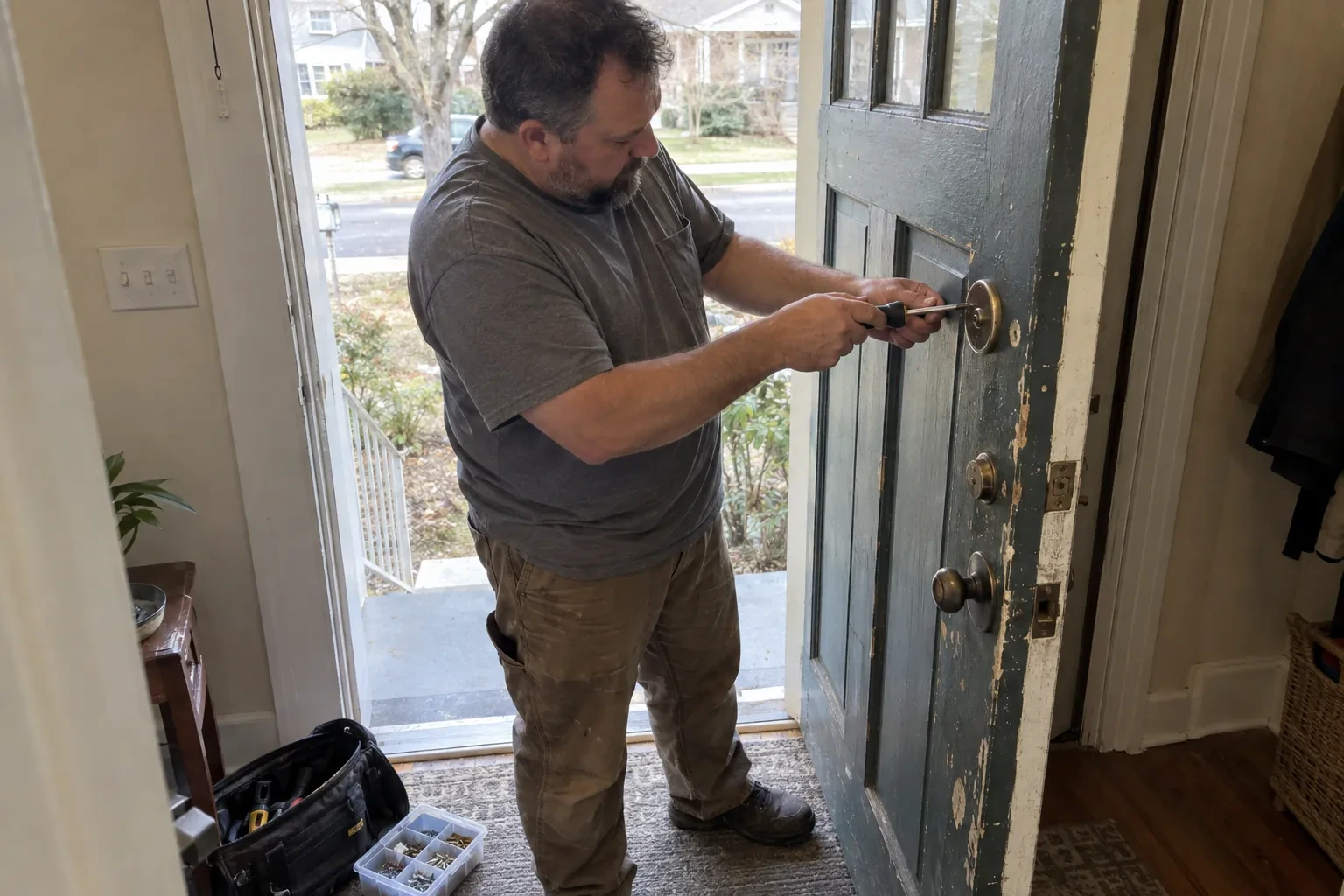
It is the single most common reason to rekey, and a sensible one. A resale home has typically passed through owners, agents, inspectors, cleaners and trades, any of whom may have had a key cut. A newly built home has been opened by construction crews using a builder's key. Rekeying on move-in means the only working keys are yours, and the same visit can bring every exterior door onto a single key, retiring the assorted keys you inherited.
How is rekeying different from replacing the lock?
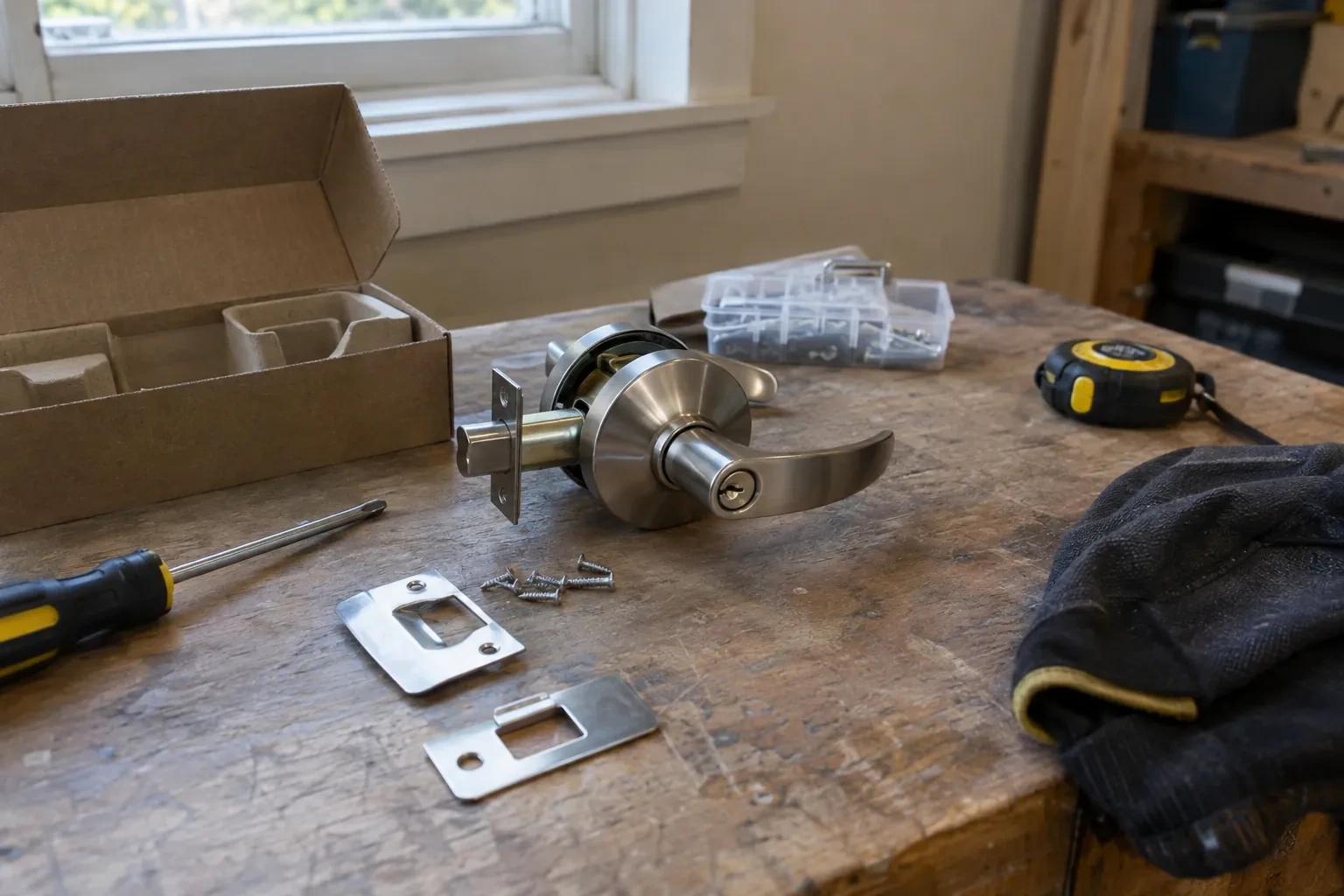
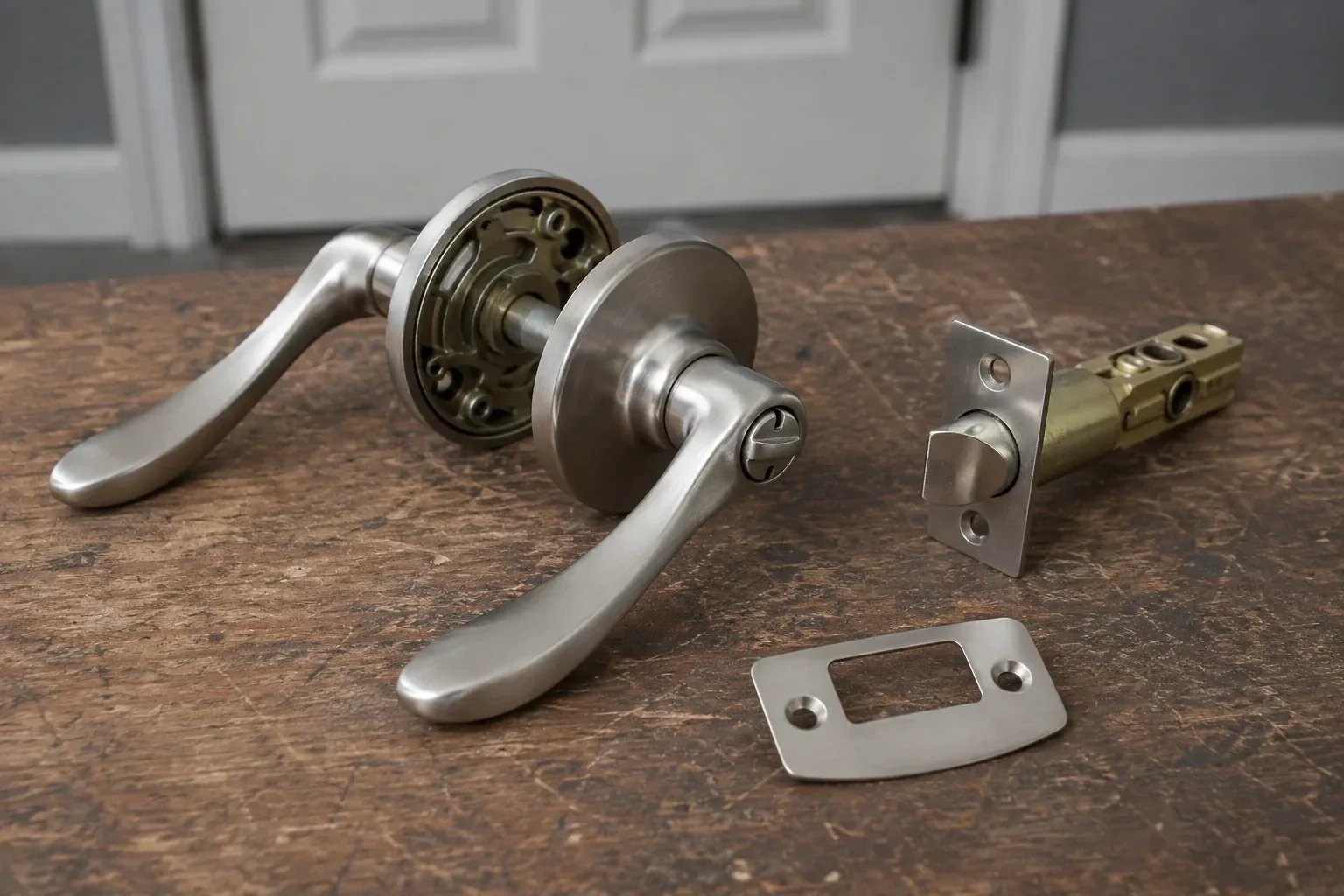
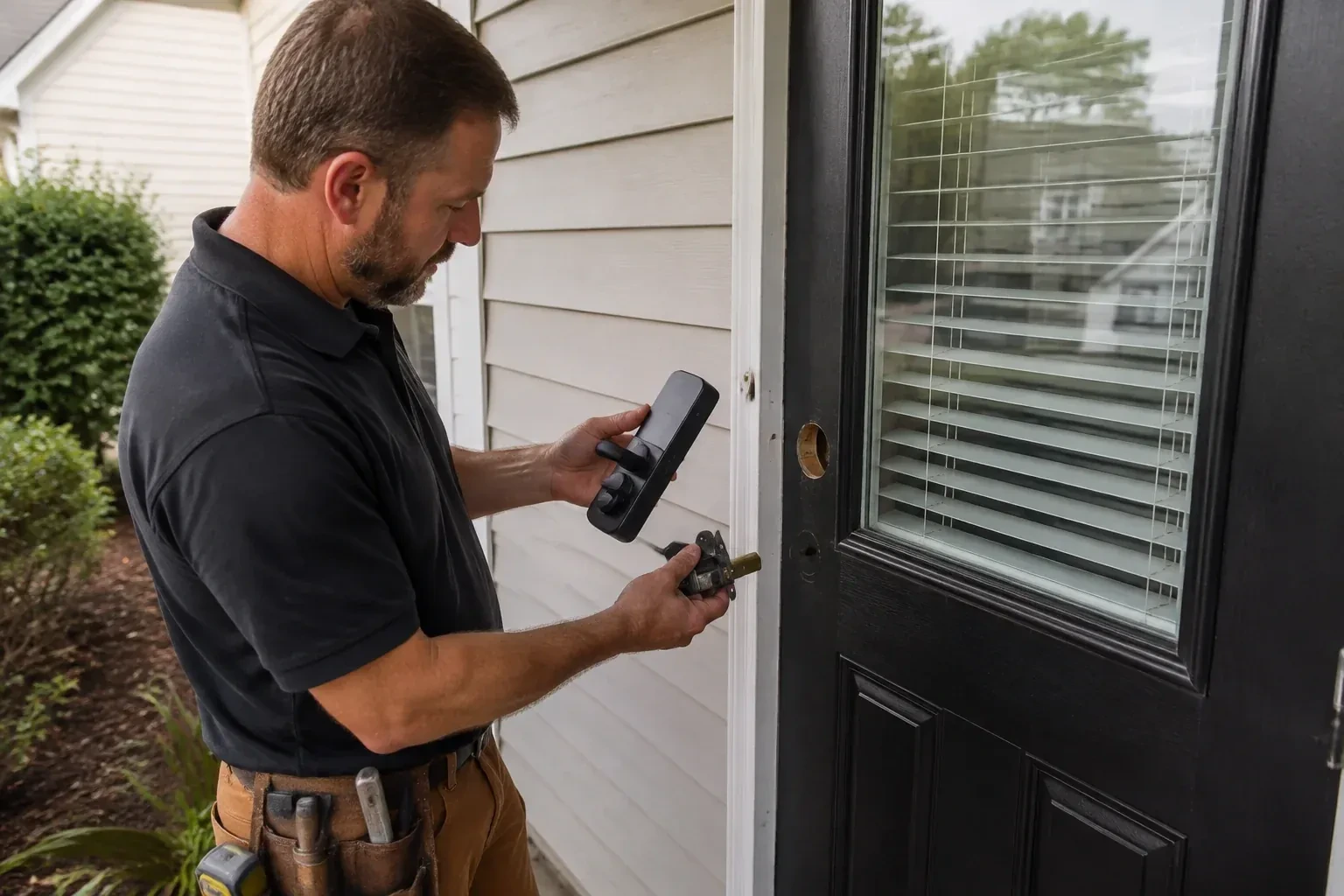
Rekeying keeps your existing deadbolt or handle set and gives it a new key, commonly by changing the pins inside, though some cylinders reset a different way. Replacing removes the whole lock or cylinder and fits new hardware. Rekeying suits locks that are in good condition and simply need a fresh key. Replacement is the better call for hardware that is worn or damaged, built to a low grade, on a keyway the other doors cannot share, or due for a change of style or a keypad.
I rent. Can I have my locks rekeyed?
Yes, with your landlord's agreement, which is what the tenancy rules here expect before a tenant changes a lock. Most landlords are glad to consent when a key has gone missing or a former roommate has moved out, and the locksmith will want to hear that the landlord knows and will be holding one of the new keys. The rekey itself runs the same as for an owner, and a short note listing the doors done is handy to pass to the landlord.
Niagara, Ontario
Niagara Gardens information
- Town
- Niagara Gardens, Niagara, Ontario
- In business
- 12 years
- Hours
- Open 24/7 · nights, weekends and holidays, same fees
- Phone
- (289) 432-1115
- Visits
- On-site assessment preferred. Request a visit or call.
What the census means at the door
71%
Older homes. About 71% of homes in St. Catharines were built in 1980 or earlier, according to the 2021 Census.
Established homes often have non-standard bores and backsets from an earlier generation of hardware. A locksmith working in such an area carries adapter plates and cylinders in the older sizes, so an upgrade fits the existing door instead of forcing a new one.
56%
A mix of homes. Single-detached houses make up about 56% of homes in St. Catharines (2021 Census).
Where houses and attached homes share an area, lockouts are as varied as the doors. A porch, a hallway or a shared vestibule each calls for a slightly different approach, and a locksmith used to all three arrives ready for whichever it is.
Nearby
Open 24/7
Request a visit
The builder handed over your new home with a stack of identical keys, and you know the framing crew, the painters and the flooring installers all used a construction key during the build.
Call now · open 24/7(289) 432-1115- On-site assessment preferred
- Same fees day, night or weekend
- 12 years in business