Facer Locksmith SpecialistsService bulletin 1 of 3
Motorcycle & Scooter Keys: inside the visit
What is actually possible depends on whether a working key still exists somewhere.
St. Catharines, Ontario · Locksmith · open 24/7
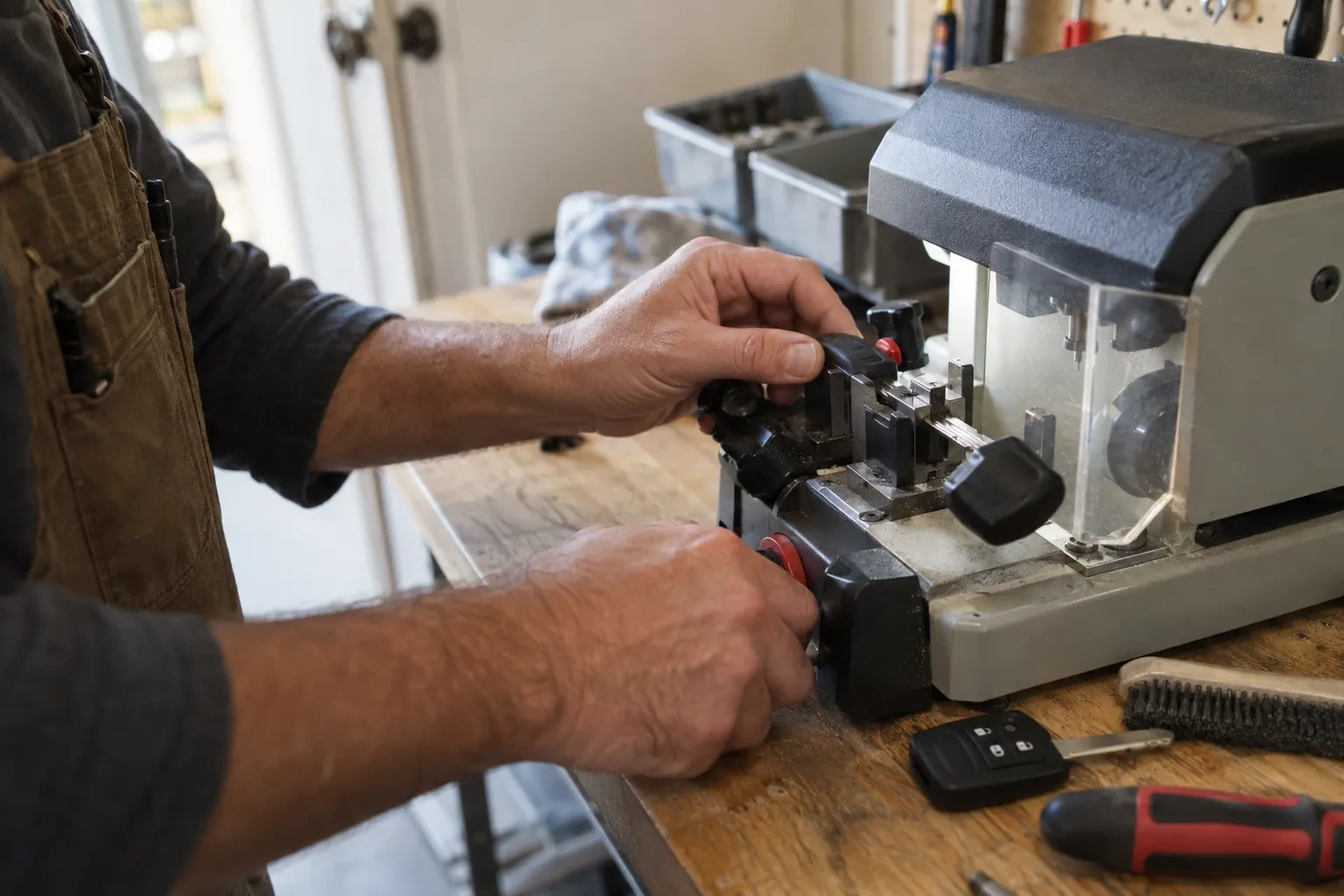
What is actually possible depends on whether a working key still exists somewhere. If one does, even a spare kept by a family member or a dealership record of the code, a fresh key can usually be cut or duplicated directly from it. If every key for the machine is gone, the locksmith reads the lock itself, translating wafer depths into a cut, or, on a machine with an immobiliser, pairs a new transponder where that system allows it, since some instead need the whole unit replaced. Either route aims for a key that starts the engine and operates the other locks the owner wants included.
Assessing wear and corrosion
Locks that live outdoors on a machine take on grit, road salt and moisture in a way that an indoor lock never does, and the locksmith checks the lock face and keyway for rust, stiffness and a gritty feel before cutting anything. A lock with corrosion inside the wafers can defeat even a correctly cut key until it is cleaned and lubricated, so this check decides whether the visit stays a straightforward key job or also needs the lock itself serviced before a new key is tested against it.
Cutting from an existing key
When a working key exists, even a spare or a worn original, the more direct route is to read its cuts on a code machine or trace them by hand and cut a fresh blank to match. The new key is checked against the old one under a light before it goes anywhere near the ignition, since a slight misread shows up as a key that almost turns but does not quite lift every wafer. Cutting from a known key is usually the shorter part of the visit, leaving more time for any other locks that need the same treatment.
Getting through the next storage season
Heading into a season of outdoor storage, a lock that has just been cleaned and lubricated is in a better position to start the next season the same way it ended this one. A light coat of corrosion inhibitor on an exposed lock face, a cover that keeps direct weather off the ignition and seat area, and keeping the machine somewhere it is not standing in meltwater all help the same mechanism that was just serviced stay free through the months it sits unused. None of this takes long, but it is easy to skip until a stiff lock brings it back to mind.